One day, Diana decided to try sculpting with clay. She bought a container, opened it at home, and delighted in the feel of the soft, pliable material. It seemed she could shape it into anything she imagined.
A couple of days later, Diana began her first sculpture. The clay had stiffened a little, but with extra pressure from her fingers she managed to form a rough figure.
Then work got busy. By the time she finally set aside a day to finish her piece, the clay had dried completely. No matter how much force she applied, it wouldn’t bend. Eventually, it cracked into pieces.
The human brain works in a similar way.
What Is Neuroplasticity?
Neuroplasticity is the brain’s ability to reorganize and rewire itself through training and experience. Like soft clay, a young brain is highly malleable: it can adapt, change, and most importantly, learn.
When an athlete practices a new movement, specific neurons fire together and form connections.
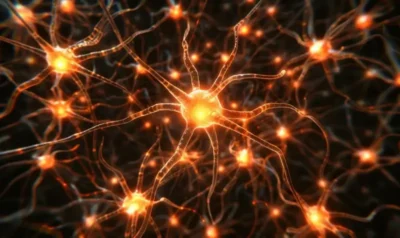
With repetition, these connections strengthen:
-More neurotransmitters are released, making it easier for signals to pass.
-Neurons grow additional dendrites: branch-like extensions, to link with other neurons.
-Myelin, the insulation around nerve fibers, thickens, allowing signals to travel faster and arrive at the right time.
This process gradually carves a strong “map” of the skill into the brain.
The Golden Window
By about age 11 for girls and 12 for boys, neurons in the front of the brain have formed thousands of new connections. This is a prime period to introduce a wide variety of movement and manipulative skills essential for future athletic development. Each repetition further strengthens motor pathways.
But just as Diana’s clay dried out, unused neural connections are eventually trimmed through synaptic pruning. While neuroplasticity continues throughout life, rewiring the brain is far easier before puberty.
How Skills Are Cemented
With enough correct practice, the brain:
-Identifies the ideal neural pathways for a skill.
-Strengthens those pathways through structural reorganization.
-Eliminates weaker routes that don’t support the skill (“neural pruning”).
Many athletes refer to this as “muscle memory.” While muscles don’t actually “remember,” the term reflects a well-developed motor pathway that allows a movement to feel automatic.
Important note: the brain refines a pathway whether the movement is correct or incorrect. This is why qualified coaching and proper technique are critical.
Ten Key Principles of Neuroplasticity 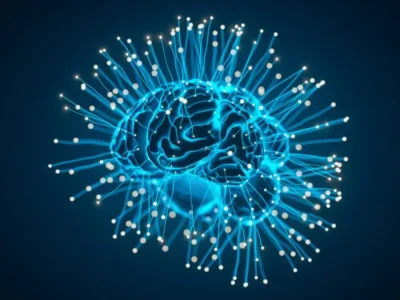
1. Use it or lose it – Unused neural connections weaken.
2. Use it and improve it – Practice strengthens pathways.
3. Specificity – The brain builds circuits for specific activities.
4. Salience matters – Learning must be meaningful to stick.
5. Transference – Mastery of one skill can benefit others.
6. Interference – Bad habits can block new learning.
7. Time matters – Complex skills require more time to embed.
8. Age matters, but not absolutely – Younger brains adapt faster, but plasticity persists for life.
9. Repetition matters – Consistent practice builds durable connections.
10. Intensity matters – Progressive challenge drives growth.
Coaching Takeaways
Neuroplasticity strengthens brain-muscle communication, allowing athletes to perform movements with efficiency and confidence.
For youth coaches, the message is clear: don’t miss the window.
Introduce young athletes to a broad range of movements. Provide unusual or unfamiliar stimuli.
Encourage multi-sport participation to avoid narrow, sport-specific patterns.
Early variety builds the foundation for athleticism at later stages of development.
Put It Into Practice
To help you design effective training, explore our complete Book Set: Formula for Success in Sports and companion Video Series: Integral Physical Conditioning for Young Athletes.
Join our SALE this week and get 25% OFF both resources!

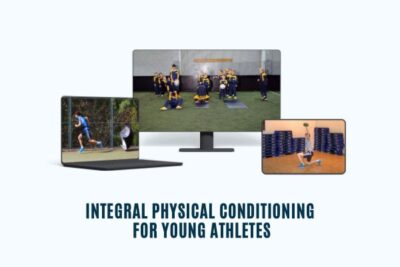
These resources outline practical programs for athletes ages 6–18, showing how to:
Structure age-appropriate training sessions.
Incorporate multi-sport and multi-movement activities.
Develop strength, speed, and coordination while preserving correct technique.