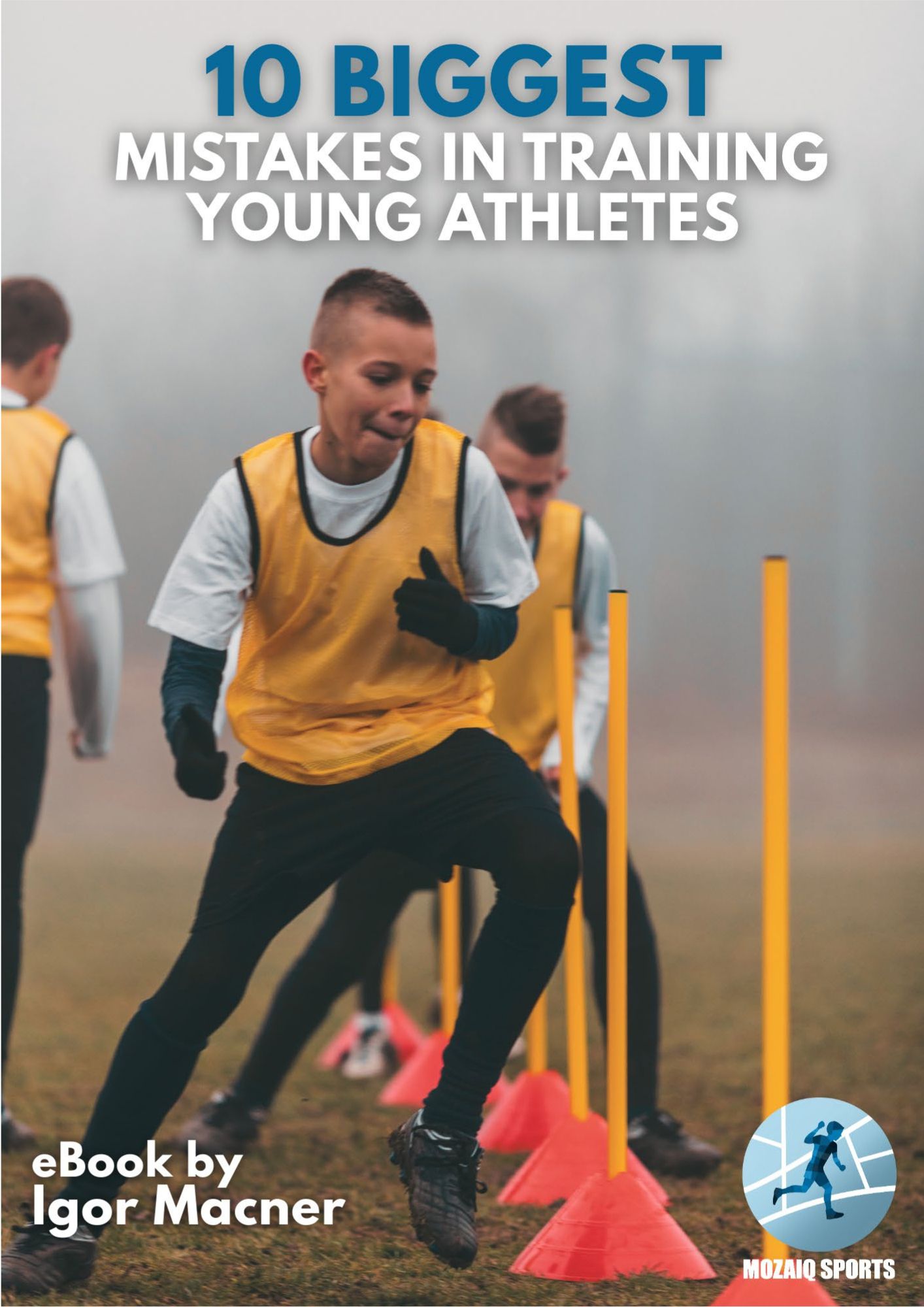
Young athletes are exposed to a wide range of internal and external stressors. The relationship between training load, psychological well-being, and recovery not only affects performance but plays a crucial role in reducing the risk of injury and illness.
This relationship is even more complex in youth athletes, due to added pressures like school commitments, social demands, multiple sports, and ongoing physical development. As a result, monitoring youth athletes often requires a different approach than with elite adults. Still, the ultimate goal is the same: safeguard athlete well-being and ensure optimal recovery for peak performance and injury prevention.
Are You Working Your Athletes Too Hard?
Have you ever wondered whether a session was too easy, too intense, or just right?
Monitoring training load helps coaches make smarter, evidence-based decisions.
One simple and widely used tool is the Rating of Perceived Exertion (RPE). Common in sports like rugby, football, and swimming, RPE simply asks athletes to rate how hard a session felt.
The original RPE scale ran from 6 to 20, but today it's more common to use a simplified 1–10 scale.
How to Use the RPE Scale Effectively
Ask for the RPE score 10–30 minutes after the session, not immediately after, when perceptions can be skewed.
Emphasize honesty—there’s no reward for rating a session higher just to look tough.
Collect scores individually, not in a group, to avoid peer influence or “everyone says 7” bias.
Calculating Training Load Using RPE
Multiply the athlete's RPE score by the effective duration of the session (excluding warm-up and cool-down).
Example:
Session length: 2 hours
Warm-up + Cool-down: 15 minutes each
Effective time = 90 minutes
John’s RPE: 8 → 90 × 8 = 720 AU (Arbitrary Units)
Peter’s RPE: 6 → 90 × 6 = 540 AU
This shows John experienced the session as harder than Peter. That could mean Peter needs a challenge—or John, possibly recovering from illness, needs a reduced load.
Why RPE Works—And Its Limits
RPE is reliable for measuring intensity, but individual context matters.
Fatigued athletes tend to report higher RPE, even in standard tests—making RPE a useful red flag for early signs of overtraining or burnout.
Making the Data Meaningful
Once you’ve collected the data, make sure to:
Interpret it consistently
Create clear “red flag” thresholds tailored to the individual
Keep data simple and visual—especially if sharing with athletes, parents, or school staff
Academic Load: An Overlooked Factor
Academic stress can impact both performance and injury risk. While this connection is still being researched, it’s clear that many young athletes face total loads from:
Schoolwork
PE classes
Independent training
Club/team sports
Effective monitoring requires a full view of all sources of stress—not just what happens on the pitch or court.
By seeing the full picture, coaches can make informed decisions to improve performance, support recovery, and protect long-term well-being.
At Mozaiq Sports, our mission is the progressive, optimal, and long-term development of young athletes—not just through training, but through smart scheduling, recovery, and rest. We believe that peak performance comes from balance, not overload. That’s why monitoring training load isn’t optional—it’s essential.
—Igor Macner, author of Formula for Success in Sports 1 & 2
Want to learn more about training and developing young athletes?
Get your copy of Formula for Success in Sports, or access Integral Physical Conditioning for Young Athletes today and take your coaching to the next level!
Enjoy our SUMMER SALE and 25% OFF all products!
References
Monitoring Made Easy! How to Monitor Your Youth Athletes Without Buying Any Equipment! (Part 1) – Athletic Evolution, Sept 12, 2016
Use of RPE-Based Training Load in Soccer – Impellizzeri et al.
Training, Wellbeing and Recovery Load Monitoring in Female Youth Athletes – Temm, Standing, Best – Waikato Institute of Technology, New Zealand
DOI: 10.3390/ijerph191811463